B2B

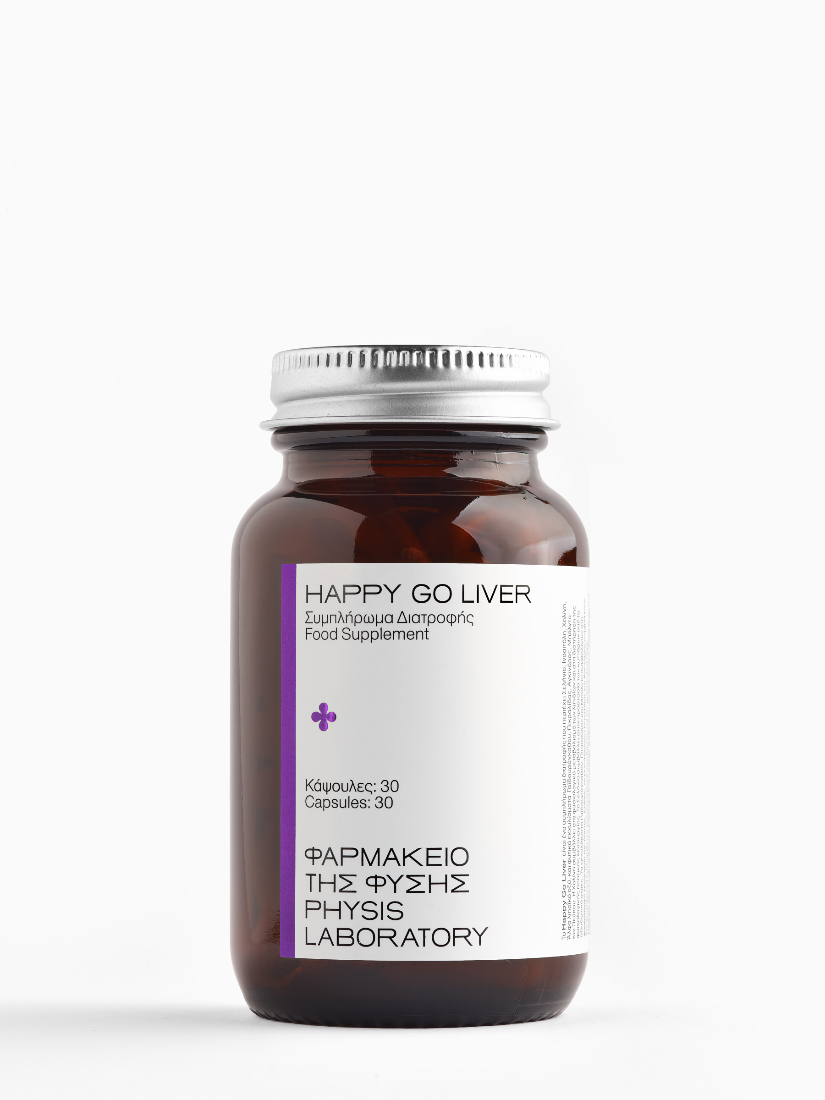
Happy Go Liver supplement

30caps
CERTIFICATIONS
Physis Laboratory Vegan Certification
Choline is an important nutrient for the synthesis of neurotransmitters and phospholipids, while its low concentration could possibly cause damage to the liver and muscles and lead to reduced cognitive function. Some more benefits are: -Inositol contributes to the synthesis of structural lipids, messenger compounds and metabolites, important in the physiological functions of the body. -Selenium is an essential trace element providing anti-oxidant and immune functions, reducing oxidative stress and inflammation, and improving mood. -A-lipoic acid (ALA) is an anti-oxidant compound involved in glucose and lipid metabolism and in energy production. -Milk thistle (Silybum marianum) is a herb rich in flavonolignans, which are natural phenols well known as silymarin with anti-inflammatory and immune-modulatory action. -Dandelion (Taraxacum officinale) is a herb widely used for the relief of the symptoms of liver and spleen diseases. -Except for dandelion’s anti-oxidant, anti-inflammatory and analgesic action, it is considered to be a potential diuretic agent. -Moreover, it contributes to the protection of the gastrointestinal tract, improving the clinical symptoms and the inflammatory response of intestinal diseases (such as colitis). -Artichoke (Cynara scolymus) extract improves intestinal transit, enhances intestinal health, contributes to the decrease of cholesterol, enhances the lipids metabolism with parallel reduction of triglycerides, contributes to the glycemic control with hypoglycemic action, has hepatoprotective effects and improves liver’s metabolism. -Boldo (Peumus boldus) extract is mainly used for the relief of dyspepsia symptoms and the treatment of mild gastrointestinal disorders. -Boldine, an alkaloid compound abundant in boldo, ameliorates endothelial dysfunction and the effects of oxidative stress.

Login to view prices

  • Enhancement of liver function.
  • Enhancement of the health of the gastrointestinal tract.
  • Anti-oxidant properties.
Formulated with: milk thistle extract (Silybum marianum), choline (as choline chloride), dandelion extract (Taraxacum officinale), artichoke extract (Cynara scolymus), alpha lipoic acid, boldo extract (Peumus boldus molina), pine extract (Pinus sylvestris), inositol, selenium (as selenomethionine), hydroxypropylmethylcellulose, magnesium stearate
Formulated WITHOUT: preservatives, gluten, fragrances, sweeteners, pigments

EOF Notification number: 106133/19-10-2020
The product is not subject to authorization.

NUTRIENT COMPOSITION

Daily dose (1-2 capsules)
  • Milk Thistle extract (silymarin): 120 – 240 mg (96 – 192 mg)
  • Choline (as Choline chloride): 84 – 168 mg
  • Dandelion extract (Taraxacum officinale): 70 – 140 mg
  • Artichoke extract (Cynarin): 60 – 120 mg (1,5 – 3 mg)
  • Alpha lipoic acid: 60 – 120 mg
  • Boldo extract (Boldine): 40 – 80 mg (20 – 40 μg)
  • Pine extract (Proanthocyanidin): 15 – 30 mg (14,25 – 28,5 mg)
  • Inositol: 10 – 20 mg
  • Selenium (as Selenomethionine): 50 – 100 μg
Consume 1-2 capsules per day with water or juice.
  • Not recommended for pregnant women and children under the age of 12.
  • Avoid use in case of kidney or heart failure and/or diabetes.
  • Do not use in the event of hypersensitivity to any of the ingredients.
  • Do not exceed the recommended daily dose.
  • Food supplements should not be used as a substitute for a balanced diet.
  • Keep out of reach of children.
  • This product is not intended for the prevention, treatment or cure of human disease.
  • Consult your doctor if you are undergoing pharmaceutical treatment or experiencing health problems.
  • Store the product in a cool and dry place, away from sources of heat and protected from light.
  • Do not use after the expiration date printed on the packaging.
Ueland, P.M. (2009). Choline and betaine in health and disease. Journal of Inherited Metabolic Disease, 34 (1): 3-15. https://doi.org/10.1007/s10545-010-9088-4 Zeisel, S.H., & da Costa, K.A. (2009). Choline: an essential nutrient for public health. Nutrition Reviews, 67 (11): 615-623. https://dx.doi.org/10.1111%2Fj.1753-4887.2009.00246.x Bizzarri, M., Fuso, A., Dinicola, S., Cucina, A., & Bevilacqua, A. (2016). Pharmacodynamics and pharmacokinetics of inositol(s) in health and disease. Expert Opinion on Drug Metabolism & Toxicology, 12 (10): 1181-96. https://doi.org/10.1080/17425255.2016.1206887 Ju, W., Li, X., Li, Z., Wu, G.R., Fu, X.F., Yang, X.M., Zhang, X.Q., & Gao, X.B. (2017). The effect of selenium supplementation on coronary heart disease: A systematic review and meta-analysis of randomized controlled trials. Journal of Trace Elements in Medicine and Biology, 44: 8-16. https://doi.org/10.1016/j.jtemb.2017.04.009 Rayman, M.P. (2000). The importance of selenium to human health. Lancet, 356 (9225): 233-41. https://doi.org/10.1016/S0140-6736(00)02490-9 Salehi, B., Berkay Yılmaz, Y., Antika, G., Boyunegmez Tumer, T., Fawzi Mahomoodally, M., Lobine, D., Akram, M., Riaz, M., Capanoglu, E., Sharopov, F., Martins, N., Cho, W.C., & Sharifi-Rad, J. (2019). Insights on the Use of α-Lipoic Acid for Therapeutic Purposes. Biomolecules, 9 (8), 356. https://doi.org/10.3390/biom9080356 Abenavoli, L., Izzo, A.A., Milic, N., Cicala, C., Santini, A., & Capasso, R. (2018). Milk thistle (Silybum marianum): A concise overview on its chemistry, pharmacological, and nutraceutical uses in liver diseases. Phytotherapy Research, 32 (11):2202-2213. https://doi.org/10.1002/ptr.6171 Martinez, M., Poirrier, P., Chamy, R., Prüfer, D., Schulze-Gronover, C., Jorquera, L., & Ruiz, G. (2015). Taraxacum officinale and related species-An ethnopharmacological review and its potential as a commercial medicinal plant. Journal of Ethnopharmacology, 169: 244-62. https://doi.org/10.1016/j.jep.2015.03.067 Chen, W., Fan, H., Liang, R., Zhang, R., Zhang, J., & Zhu, J. (2019). Taraxacum officinale extract ameliorates dextran sodium sulphate‐induced colitis by regulating fatty acid degradation and microbial dysbiosis. Journal of Cellular and Molecular Medicine, 23: 8161-8172. https://doi.org/10.1111/jcmm.14686 Ben Salem, M., Affes, H., Ksouda, K., Dhouibi, R., Sahnoun, Z., Hammami, S., & Zeghal, K.M. (2015). Pharmacological Studies of Artichoke Leaf Extract and Their Health Benefits. Plant Foods for Human Nutrition, 70 (4): 441-53. https://doi.org/10.1007/s11130-015-0503-8 Santos, H.O., Bueno, A.A., & Mota, J.F. (2018). The effect of artichoke on lipid profile: A review of possible mechanisms of action. Pharmacological Research, 137: 170-178. https://doi.org/10.1016/j.phrs.2018.10.007 Jalili, C., Moradi, S., Babaei, A., Boozari, B., Asbaghi, O., Lazaridi, A.V., Kermani, M.A.H., & Miraghajani, M. (2020). Effects of Cynara scolymus L. on glycemic indices:A systematic review and meta-analysis of randomized clinical trials. Complementary Therapies in Medicine, 52: 102496. https://doi.org/10.1016/j.ctim.2020.102496 Committee on Herbal Medicinal Products (2009). Community herbal monograph on Peumus boldus Molina, Folium. Londres: European Medicines Agency. Lau, Y.S., Ling, W.C., Murugan, D., & Mustafa, M.R. (2015). Boldine Ameliorates Vascular Oxidative Stress and Endothelial Dysfunction: Therapeutic Implication for Hypertension and Diabetes. Journal of Cardiovascular Pharmacology, 65 (6): 522-31. https://doi.org/10.1097/fjc.0000000000000185

SIMILAR PRODUCTS

Are you interested in learning more information?

Unlock business potential! Contact us today to upgrade your business or register.